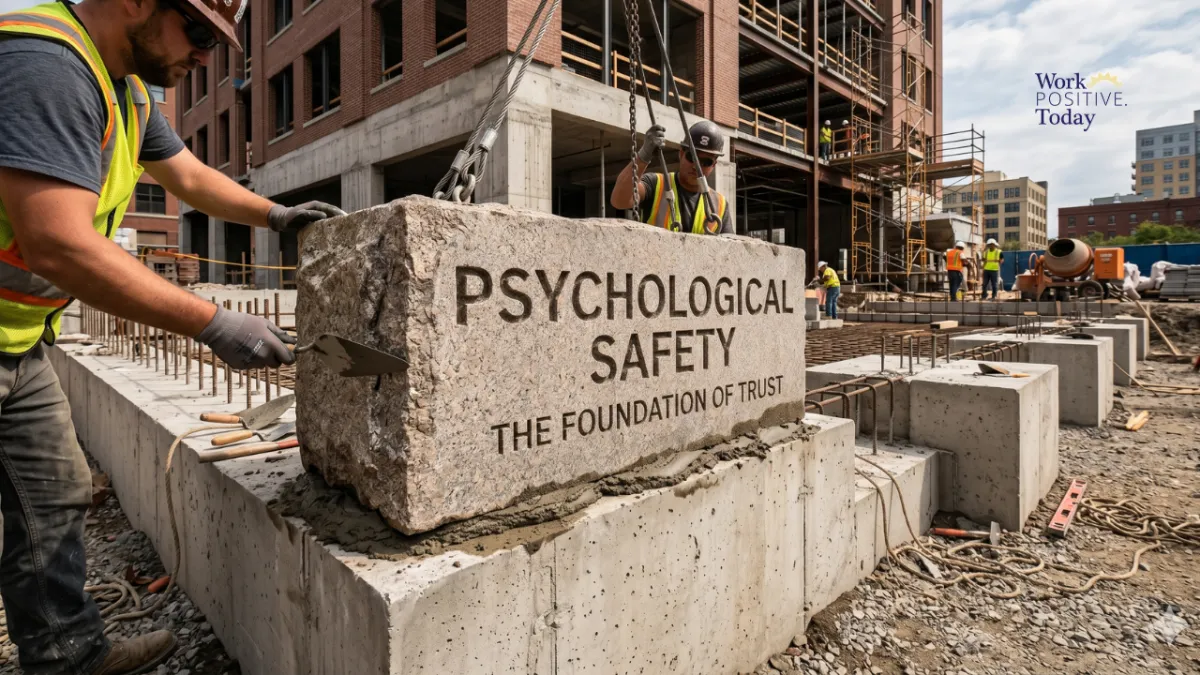
Psychological Safety Is the Foundation of a Mentally Healthy Work Culture
One in five of the people you lead at work manages a mental health condition.
One in three faces an anxiety disorder. One in two takes antidepressant or anti-anxiety medication at some point in their lives. Mental health prescriptions jumped 30% during the pandemic and are at that same elevated level today.
These are your people. The ones you lead. The ones who look to you for clarity in the chaos, purpose in the predicaments, and meaning in the mayhem.
You create the culture they work from.
In the United Kingdom, the Health and Safety Executive calculated that 54% of lost work time traces to work-related stress, anxiety, and depression. If a factory owner heard that 54% of machine downtime came from a single source, the machines would stop until the root cause got fixed.
Your people deserve that same urgency.
The T.H.R.I.V.E. framework coaches you as a people leader to deliver on this urgency.
The T in T.H.R.I.V.E. is for Trust: Psychological Safety Is Your Foundation.
Same Grief, Two Different Outcomes
Tom Oxley, founder of Bamboo Mental Health, shared two stories with me on the Work Positive Podcast.
Nick consistently exceeded expectations and was known around the office as the genuinely nice guy. Then his mother died. Grief deepened into depression. Nick requested flexible working arrangements. His manager said “No.” Nick spiraled, missed work, and eventually left the organization broken.
Same grief. Same type of organization. Completely different outcomes.
The difference was trust.
Safety Lives in the Brain
Anne Grady, resilience expert and two-time TEDx speaker, told me on her Work Positive Podcast episode that psychological safety is more than a cultural nicety. It is biology.
As the brain perceives threat, the nervous system engages fight-or-flight. The prefrontal cortex, responsible for reasoning, creativity, and emotional regulation, goes offline. Anne told me, "The greatest threat of all to the human brain is not taxes or death. It's uncertainty."
Your people bring heavy things to work that work did not create. The question is whether your culture helps them carry the weight or adds to it.
Culture is a Practice, Rather than a Project
Anne added, "Culture isn't a project. It's a practice. And you can't promote what you don't practice."
As the people leader, you are the culture. Your team calibrates from you every day. Trust passes the sniff test, or it does not. Your people have sensitive noses.
Tom Oxley puts it simply. "We've got people working for us, not problems."
Which do you think about more: people or problems?
Your Trust Do One Thing (DOT) Challenge
This week, make it safe for one person on your team to not be okay.
Ask, "How are you really doing?"
Leave an agenda out of the conversation.
Listen all the way through rather than rushing to fix.
One honest conversation at a time grows trust into a mentally healthy, Work Positive Culture.
Work Positive Bottom Line
Trust is your foundation. Build it today.
This post is from Dr. Joey Faucette's newest book, T.H.R.I.V.E. @ Work: Mental Health, Culture, and the People You Lead.
#psychologicalsafety #trustatwork #mentalhealth #workculture #peopleleadership #THRIVEframework #employeewellbeing #leadershippresence #WorkPositive